Field notes A-801
Why we will not open your wall until everything is in the building
The single scheduling rule that decides whether a kitchen finishes in thirteen weeks or twenty-two. It has nothing to do with carpentry.
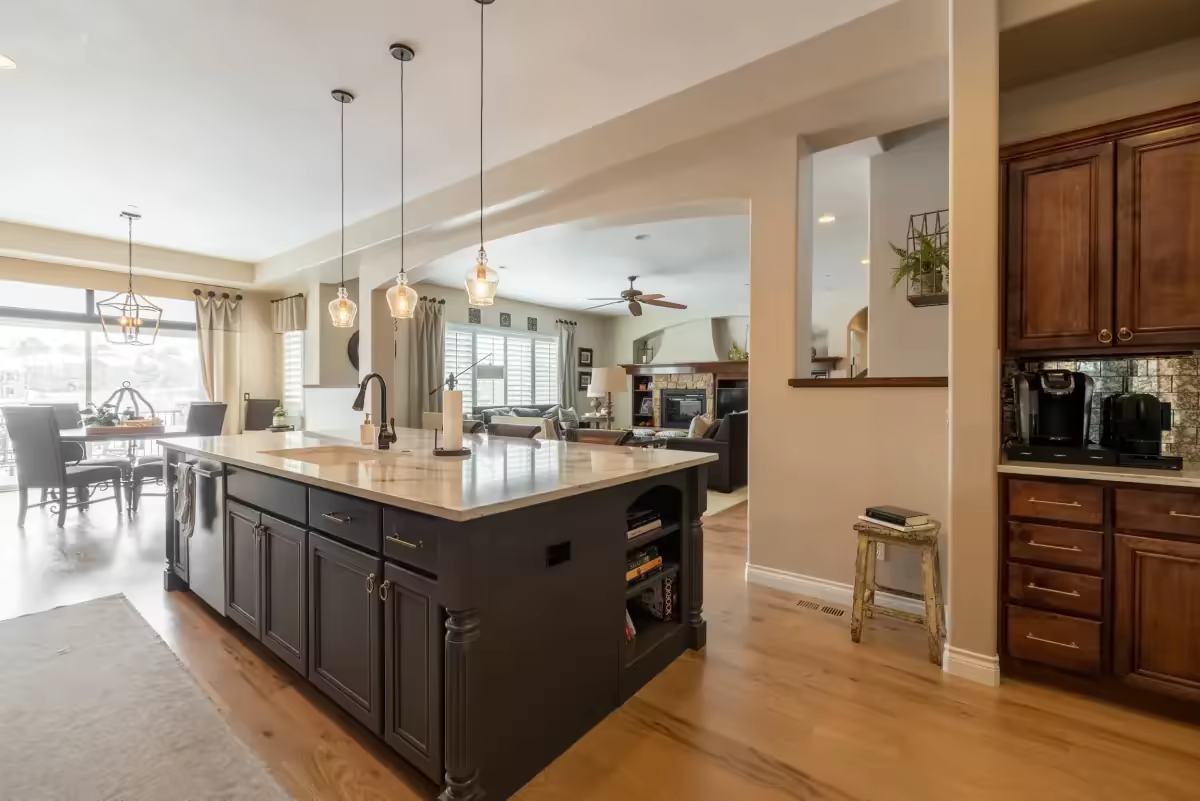
Ask ten homeowners what went wrong on their last remodel and most will describe a symptom: the crew disappeared for two weeks, the counters were wrong, the job ran three months long. Ask what caused it and the answer is nearly always the same thing wearing a different hat. Something was not on site when the schedule needed it, so the crew moved to another job, and the day you lost was never one day.
A lost day is never one day
A remodel crew is a queue. Demo feeds framing, framing feeds rough-in, rough-in feeds inspection, inspection feeds close-up. Each step has one crew and that crew has a calendar with other people on it.
When the cabinets slip by nine days, you do not lose nine days. You lose nine days, plus however long it takes for your carpenter’s next free block, plus the inspector’s next available slot, plus the stone fabricator’s template window which is booked three weeks out. Nine days of supplier delay routinely turns into five weeks of schedule.
That compounding is why we hold one rule above every other:
Nothing is demolished until every cabinet, slab, tile, fixture and appliance is delivered, unwrapped, counted and inspected.
What "inspected" actually means
Delivered is not the same as correct. Every item that arrives at the shop gets opened and checked against the order before it counts as received.
- Cabinet boxes are checked against the shop drawings for dimension, hinge side and finish. A door that arrives in the wrong sheen is a two-week refinish and we would rather find it in week six than week eleven.
- Slabs are viewed and tagged at the yard before they ship, then re-checked on arrival for the chips that happen in transit.
- Tile is counted and the lot number recorded. Two lots of the same handmade zellige are not the same colour, and you will see the line.
- Appliances are unboxed and the rough-in dimensions checked against what we framed. A 36-inch column refrigerator that is actually 35-3/4 changes a filler.
- Fittings are matched to the valve bodies already specified. Unlacquered brass from two suppliers is two different colours.
None of this is clever. It is a checklist and somebody’s afternoon. It is also the difference between a kitchen that finishes and one that limps.
What this costs you
Two things, and we will be straight about both.
The first is time at the front. Holding demo until procurement is complete adds roughly three to four weeks to the calendar before anyone touches the house. The total job is shorter, but the start is later, and if you are measuring from the day you signed, it can feel slower.
The second is money committed earlier. You are paying deposits on cabinetry, stone and appliances before there is anything to look at. That is genuinely harder than paying as the work appears.
What you get for it: your house is open for seven weeks instead of fourteen. You cook in your own kitchen a month sooner. And the crew that starts your job is the crew that finishes it, because nobody had to go work somewhere else while your cabinets sat on a truck in Elizabeth.
The one exception
Structural work with unknowns behind it. If we are opening a bearing wall in a house built before 1940, we will sometimes demo that wall early, on its own, so the engineer can see what is actually there before the rest of the order is finalised. We have found balloon framing where a plan said platform, and a second chimney that was not on any drawing.
That is a deliberate, scoped exception with its own price and its own week in the programme. It is not the same as starting the job hopefully and finding out later.